Somewhere in your organization right now, there’s an AI tool making decisions that nobody has fully reviewed.
It might be screening job applications. It might be flagging “suspicious” customer behaviour. It might be generating responses to people who think they’re talking to a human. And the uncomfortable part is this: your data protection compliance checklist was never built to catch what it’s doing.
That’s not a flaw in your checklist. It’s just not what it was designed for.
Compliance And Governance Are Not The Same Thing
For years, data protection professionals have measured risk through a familiar lens. Consent obtained. Lawful basis documented. Data minimised. Retention periods respected. Breach protocols in place. Tick the boxes, pass the audit, sleep well.
That framework still matters. It’s just no longer enough.
AI systems don’t just store and process data, they make decisions with it. And decisions require something compliance checklists were never built to track: accountability for judgment calls made by a machine, at scale, often without a human reviewing each one.
This is the exact gap regulators are now racing to close. The EU AI Act has already started reshaping how organisations classify and manage AI risk, and that thinking is spreading well beyond Europe, including into how Nigerian and African regulators are starting to frame their own approach to AI oversight. If your organisation touches EU markets, uses AI vendors built under that framework, or simply wants to be ahead of where local regulation is heading rather than scrambling to catch up, this is not a “later” problem.
Why This Catches Even Experienced Professionals Off Guard
Here’s what makes this shift tricky. The people most confident about their compliance posture are often the ones most exposed to AI governance gaps, simply because they’ve spent years mastering a framework that AI has quietly outgrown.
You can be fully compliant on paper, fully certified, fully audited, and still have no answer for questions like:
- Who signed off on the risk level of this AI system before it went live
- What happens when the model’s decision can’t be explained in plain language
- Who is accountable when an automated decision causes harm
- How often is the system’s output actually reviewed, and by whom
If those questions make you pause, you’re not behind. Most organisations are in the exact same position. The ones who move first are the ones who’ll be trusted with the harder conversations later, by regulators, by clients, and by their own leadership.
Closing The Gap Doesn’t Require Starting Over
This is the part that gets missed. You don’t need to abandon everything you know about data protection to get good at AI governance. You need to extend it. The core instincts, accountability, transparency, minimising harm, are the same. What changes is where and how you apply them.
That’s exactly the shift being walked through in an upcoming session, “From Privacy Compliance to AI Governance,” covering the regulatory developments actually shaping this space right now, the emerging risks most checklists miss, and practical governance measures you can start applying immediately rather than theory that sounds good in a slide deck and dies there.
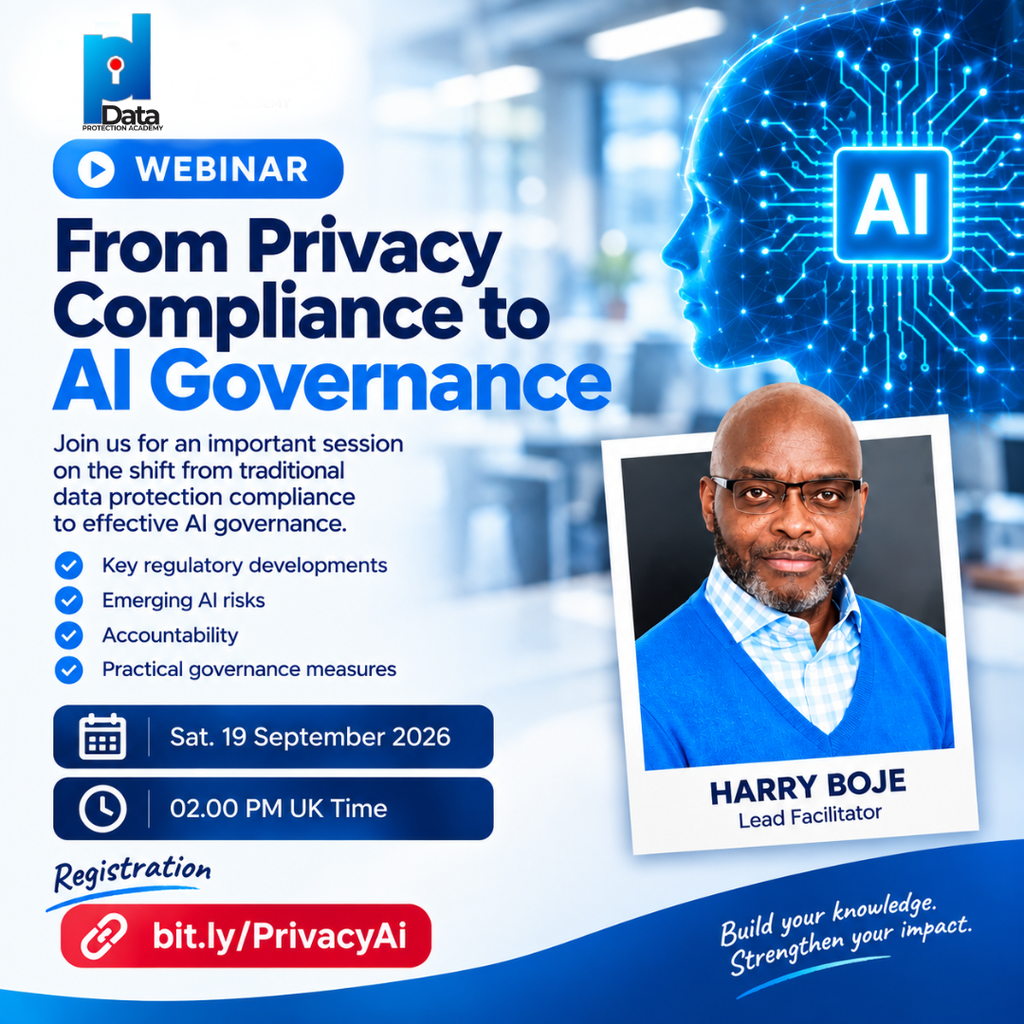
If you’ve been sensing that your compliance knowledge needs an upgrade but haven’t found the right place to start, this is worth an hour of your time: https://bit.ly/4hvyUPd
The Professionals Who Will Matter Most In The Next Few Years
There’s a quiet shift happening in this industry. The professionals who stand out are no longer just the ones who know the regulations best. They’re the ones who can look at an AI system and immediately ask the right questions about accountability, before something goes wrong, not after.
That skill isn’t something you pick up by accident. It’s built deliberately, usually by people who decided to get ahead of the curve while everyone else was still catching up.
If that’s the professional you want to be, or the standard you want your team held to, start here: https://bit.ly/4hvyUPd
The Real Risk Isn’t The Technology
It’s the assumption that yesterday’s compliance framework still covers today’s decisions. AI is already inside your organisation, quietly making calls that used to belong to people. The question is not whether you’ll eventually need to govern it properly. It’s whether you’ll do it before something forces your hand.
👉 Reserve your seat: https://bit.ly/4hvyUPd